In the selection and application of
high-power electric cylinders for high-temperature conditions, many users ignore the particularity of high-temperature working scenarios. They simply select products by experience or use alternative solutions for convenience, resulting in frequent equipment failures and production downtime.
Here are three critical mistakes that must be avoided:
1. Adopting normal-temperature electric cylinders for high-temperature operation: Sharp service life decline and frequent faults
The most common and hazardous mistake. The permanent magnets, seals, lubricating grease and other core components of standard high-power electric cylinders are only suitable for conventional environments of -20℃ to 60℃. When operating above 60℃, a series of cascading failures will occur. The motor permanent magnets will demagnetize rapidly, causing thrust attenuation of over 30% in a short time. Conventional coil insulation ages rapidly under high heat, which easily leads to short circuits and motor burnout. Insufficient lubrication causes dry friction between the screw and nut, increasing wear rate by more than five times.
2. Using ordinary rubber seals and standard grease: Seal failure and component jamming
In high-temperature environments, conventional rubber parts such as nitrile rubber will age, harden and crack quickly. Dust and moisture will penetrate the seals and cause screw corrosion inside the electric cylinder. Meanwhile, ordinary lithium-based grease softens and drains at temperatures above 80℃ and fails to form a stable protective oil film. Dry friction between the screw and steel balls generates harsh noise, locks up key components, and even forces production to stop.
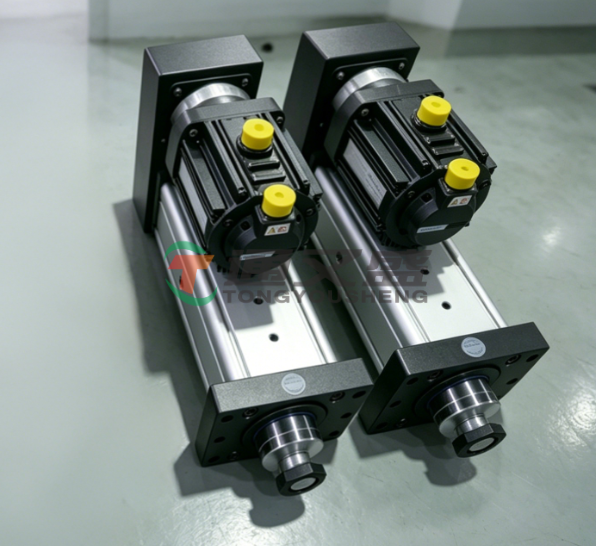
A more hidden risk is grease carbonization and sludge accumulation under high temperature, which clogs the screw circulation channel. Such deposits cannot be completely removed even after replacing with high-temperature grease, eventually requiring full screw module replacement and raising maintenance costs substantially. The standard solution is to adopt fluororubber or metal seals, together with temperature-resistant grease. Both are essential for stable operation.
3. Neglecting derating selection: Full-load operation equals chronic damage
High temperatures inherently reduce motor torque and screw load capacity of high-power electric cylinders. Selecting models according to normal-temperature rated parameters and running at full load is equivalent to long-term overloading. For example, the thrust of electric cylinders will drop naturally by 20% to 40% at 120℃. If the actual load reaches the rated value, the motor will keep overheating, triggering over-temperature protection or permanent damage. Excessive stress will also lead to screw bending or fracture.
It is a universal industry standard to reserve sufficient safety margins for high-temperature model selection. The higher the temperature, the larger the safety factor required. A safety factor of 1.5 times is necessary for 80℃ working conditions, and 2.5 times or higher for environments above 150℃. This is not unnecessary cost, but the core guarantee to ensure stable operation and reduce equipment failure.