Issues such as step loss or progressive deviation in high-speed electric cylinders are typically caused by a combination of factors including electrical control, mechanical structure, or external interference. They can be systematically diagnosed and resolved by following these steps:
Step 1: Determine if the deviation is consistent
If the high-speed electric cylinder produces a fixed, consistent deviation at the same position every time, the problem usually lies not in the mechanical accuracy of the cylinder itself, but in incorrect settings or programming of the control system (such as electronic gear ratio or pulse equivalent). Parameter adjustment or position compensation on the electrical side is required.
Step 2: Check for electrical interference
Verify whether the motor power cables and encoder cables are routed separately from control cables, and ensure proper grounding. Strong electromagnetic interference may cause pulse signal loss (step loss) or abnormal encoder signals, resulting in random positional deviation of the high-speed electric cylinder.
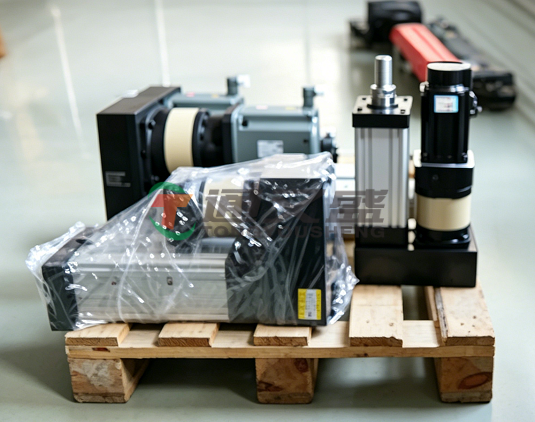
Disconnect the load and run the cylinder under no-load conditions, then measure its repeat positioning accuracy using a dial indicator. If the accuracy fails to meet the standard under no load (e.g., fails to reach ±0.02 mm), there may be defects in internal mechanical components such as the lead screw or bearings, and technical support should be contacted for inspection and repair.
Step 4: Inspect the load and frame rigidity
If the accuracy is acceptable under no load but deviation and progressive drift occur under load, the cause is most likely excessive load or insufficient rigidity of the frame, leading to deformation under force. Recalculate whether the load exceeds the limit and reinforce the structure supporting the high-speed electric cylinder.
Additional note: Step loss in high-speed electric cylinders
Step loss is common in systems equipped with stepper motors, especially at excessively high speeds or under sudden load changes. For systems using servo motors, step loss or deviation is more likely caused by interference or parameter issues as mentioned above.
Summary
The core approach to solving step loss or progressive deviation in high-speed electric cylinders is:
first distinguish whether the problem is
electrical or
mechanical, verify performance under
no load before testing under load, and eliminate potential causes one by one to identify the root issue.