Choosing the right grease type for linear electric cylinders is just like picking a well-fitted pair of running shoes for an athlete—every detail is crucial. So, how should we select the appropriate grease for linear electric cylinders based on working conditions? Next, we will analyze and explain this question in detail.
Load on Linear Electric Cylinders: Light or Heavy?
The load borne by linear electric cylinders is a vital factor that cannot be ignored when selecting grease.
When a linear electric cylinder is under heavy load—such as when driving large industrial valves, heavy robotic arms, and other equipment—its internal components are subjected to enormous pressure and impact forces. This requires the grease to have sufficient load-carrying capacity and anti-wear properties to prevent it from being squeezed out under high pressure, which would lead to lubrication failure and component wear.
For linear electric cylinders operating under such heavy-load conditions, grease with high-viscosity base oil, high consistency, and extreme pressure (EP) additives should be selected. For example, grease containing sulfur-phosphorus EP additives can form a tough lubricating film under high pressure, effectively resisting direct contact between metal surfaces, reducing wear, and ensuring the stable operation of linear electric cylinders under heavy loads.
For linear electric cylinders under light load—such as actuators used to control small valves and adjusting mechanisms—ordinary grease is sufficient to meet the operational requirements.
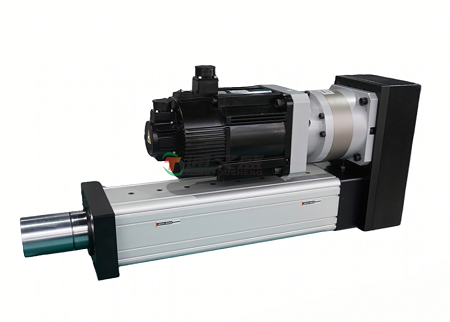
Operating Environment of Linear Electric Cylinders: Humid or Corrosive?
The working environment of linear electric cylinders is also an important consideration for grease selection.
If a linear electric cylinder operates in a humid or wet environment, such as in water treatment plants or coastal areas, the grease must have excellent water resistance and rust-preventive properties. This prevents moisture from infiltrating, which would cause the grease to emulsify and deteriorate, losing its lubricating effect, and also avoids rust and corrosion of metal components.
In environments with chemical corrosion risks, such as chemical workshops and electroplating production lines, linear electric cylinders are exposed to erosion by chemical substances, requiring the grease to have chemical resistance.
Fluorinated grease is an ideal choice for such environments. It features outstanding chemical stability, can resist erosion by acids, alkalis, salts and other chemical substances, and provides long-lasting lubrication and protection for the components of linear electric cylinders in chemically corrosive environments, ensuring their normal operation.
By gaining an in-depth understanding of the working conditions of linear electric cylinders, mastering the characteristics of different greases, referring to selection examples for common components, and avoiding common selection mistakes, we can find the most suitable grease for linear electric cylinders. This will keep them fully operational in industrial production, ensuring stable and efficient performance at all times.

Address: Room 601, Building 5, Liandong U Valley, No. 1330 Jinfeng South Road, Mudu Town, Wuzhong District, Suzhou, Jiangsu, China
Suzhou TongYouSheng Electronic Technology Co., Ltd. - An ISO9001 Certified Company All rights reserved. Privacy Policy