Problems of all kinds are inevitable during the operation of small electric cylinders. When issues arise, how should we address them? Next, we will focus on the problem of inaccurate positioning in small electric cylinders.
Small Electric Cylinder Malfunction: Inaccurate Positioning – Falling Short of the Mark
Symptom: When a small electric cylinder operates repeatedly at the same position, there is a deviation between the actual stop point and the set value, which impairs machining or assembly precision.
Common Causes:
Contamination or damage to encoders or feedback components, leading to unstable signals
Increased lead screw backlash (caused by wear or poor lubrication)
Loose mechanical installation resulting in coaxiality or parallelism deviations
Excessively large load inertia, causing overshoot or lag during acceleration and deceleration
Mismatched control parameters for the current working conditions
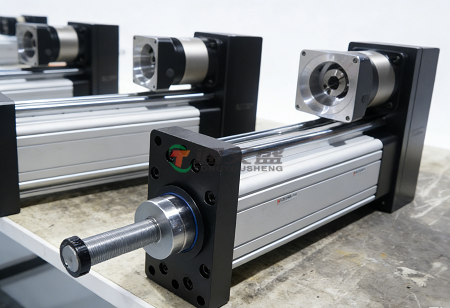
Recommended Troubleshooting and Solutions:
Inspect the feedback system: Clean the encoder, check cables and connectors to ensure stable signal transmission.
Evaluate mechanical wear: Measure lead screw backlash and replace or re-preload the screw if necessary.
Recheck installation precision: Ensure rigid connection between the small electric cylinder and the load to reduce errors caused by external deformation.
Optimize control parameters: Adjust gain and filtering according to the load inertia of the small electric cylinder to suppress overshoot and oscillation.
Segmented calibration: Perform origin reset and regular calibration for key positions to maintain long-term positioning consistency.
Useful Tip: Inaccurate positioning is sometimes a result of chronic accumulation of issues. Regular maintenance and parameter rechecks for small electric cylinders can nip potential problems in the bud.
From Malfunction to Stable Operation: Daily Maintenance of Small Electric Cylinders Is Critical
Although cylinder collision, overheating and inaccurate positioning present different symptoms, their causes are often linked to parameter settings, mechanical conditions, environmental factors and maintenance. Follow these guidelines to enhance the durability and stability of small electric cylinders:
Select the right model for the working condition: Reserve an appropriate safety margin to avoid long-term full-load operation of the small electric cylinder.
Conduct regular inspections: Check the condition of lubrication, fasteners and feedback components.
Monitor operating data: Track trends in temperature, current and position error for early warning of potential issues.
Train operators: Standardize start/stop and abnormal handling procedures to reduce human error.

Address: Room 601, Building 5, Liandong U Valley, No. 1330 Jinfeng South Road, Mudu Town, Wuzhong District, Suzhou, Jiangsu, China
Suzhou TongYouSheng Electronic Technology Co., Ltd. - An ISO9001 Certified Company All rights reserved. Privacy Policy