


Four Practical Solutions to Reduce Operating Noise of Ball?Screw Electric Cylinders at the Source
1. Scientific Selection with Sufficient Load Margin
Avoid long?term full?load and limit?load operation of electric cylinders. A safety margin of 30?% or higher on rated output force is recommended during selection. This keeps the ball?screw electric cylinder operating within its optimal working range, reduces sustained high?pressure stress on screws and balls, and cuts frictional noise and structural deformation from the root cause.
2. Optimize Servo Parameters to Mitigate Overall Vibration
Moderately reduce the preload value of the ball screw to eliminate extra frictional noise caused by excessive pre?tightening force. Meanwhile, access the servo drive backend to optimize the S?curve acceleration?deceleration profile and lessen shock during start?stop and travel. Appropriately lower the velocity?loop and position?loop gains to reduce overall vibration induced by frequent servo system adjustments.
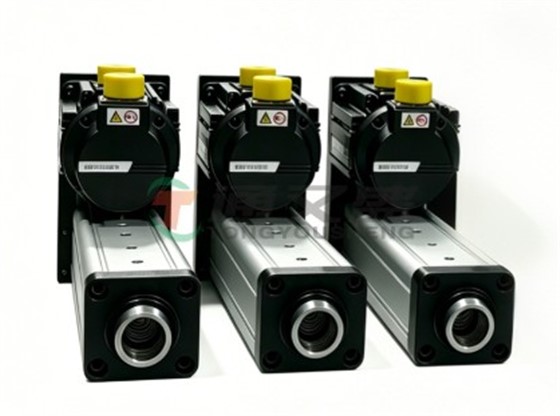
3. Upgrade Transmission Components for Smoother Motion
For applications requiring strict low?noise performance, precision ground ball screws are preferred. Compared with rolled ball screws, ground ball screws feature higher raceway accuracy and lower surface roughness for smoother ball movement, directly lowering mechanical transmission noise by more than 30?%.
4. Reinforce Mounting Base to Avoid Structural Resonance
For heavy?duty conditions, thicken the mounting base plate and add reinforcing ribs to ensure a flat, gap?free mounting surface and prevent resonance caused by insufficient frame rigidity. After installation, calibrate parallelism and perpendicularity with dial indicators to eliminate extra abnormal noise originating from eccentric loading.
Rising load?dependent noise and low?speed current fluctuation of ball?screw electric cylinders are predictable and repairable common faults rather than product quality defects. Key selection and maintenance principles for low?noise and high?smoothness operation: reserve adequate load margin during selection and prioritize precision ground ball screws; guarantee base rigidity and coaxiality during installation; perform regular lubrication maintenance; and tune optimal servo parameters on?site.