


Many enterprises frequently encounter intermittent abnormal noise when using linear electric cylinders. The noise occurs randomly without fixed patterns, making troubleshooting rather challenging. It not only impairs equipment operating performance, but may also imply hidden risks such as component wear and assembly defects. Combined with practical field experience, this article introduces step?by?step troubleshooting logic and solutions for rapid fault localization.
First, give priority to external installation and mechanical looseness checks, the most common trigger of intermittent abnormal noise.
Inspect fastening bolts on the linear electric cylinder’s base, flanges and brackets. Long?term equipment vibration may cause slight screw loosening, generating intermittent knocking and friction sounds during operation. Meanwhile, check couplings, connected tooling and load connectors for clearance, misalignment or eccentricity. Offset loads create uneven stress on the cylinder body and trigger random noise.
Next, inspect the internal transmission structure of the linear electric cylinder.
Internal lead screws, nuts, guide rails and bearings are core moving components. Dried?out or insufficient grease results in intermittent friction noise during operation. Worn balls or foreign debris inside raceways also produce sporadic noise that varies with travel position. In addition, uneven tension or tooth?surface wear on transmission parts such as timing belts and gears may cause abnormal noise under specific rotating speeds and loads. Compare no?load and loaded operation of the linear electric cylinder to narrow down the fault range.
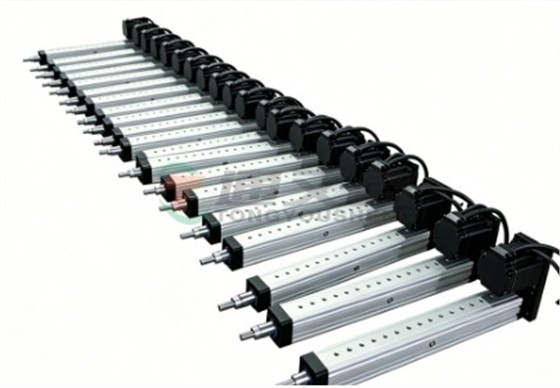
Then identify faults originating from the motor and servo system.
Damaged servo?motor bearings, eccentric rotors, or improperly configured drive parameters with overly aggressive acceleration?deceleration can induce motor jitter accompanied by intermittent noise. Jog the motor under standalone no?load condition to rule out inherent motor defects. Meanwhile optimize acceleration?deceleration parameters to avoid noise caused by start?stop impact.
Finally, check operating conditions and surrounding environment of the linear electric cylinder.
Impacts at stroke limits against limit stoppers, workpieces or debris trapped in moving gaps, as well as dust ingress into the cylinder housing, can all generate irregular noise. Clear surrounding foreign objects, verify reasonable limit positions and implement reliable dust?proof protection.
Most intermittent?noise issues can be resolved quickly by following the outside?in, simple?to?complex inspection sequence. Regular screw tightening, grease replenishment and dust cleaning in daily use will reduce fault probability. If the root cause remains unidentified after troubleshooting, please provide the linear electric cylinder model, working conditions and noise?occurrence scenarios for further analysis.